AI Content for Brands: Studio vs Generator vs Agency
Every brand that takes visual content seriously today faces the same question: how do you make AI content that doesn't look like AI content. The problem isn't whether to use artificial intelligence — that's settled. The problem is who runs it and how. The same models in the hands of three different operators produce three completely different results. Your options are a cheap generator, a traditional agency, and an AI studio. Each path comes with a different price, a different timeline, a different quality, and — the part most people miss — a different legal status for whatever gets created.
This is a decision-focused comparison. The goal isn't to prove one option is always best, because it isn't. The goal is to help you choose deliberately, knowing what you're paying for and what you're not getting.
How an AI generator differs from an AI studio
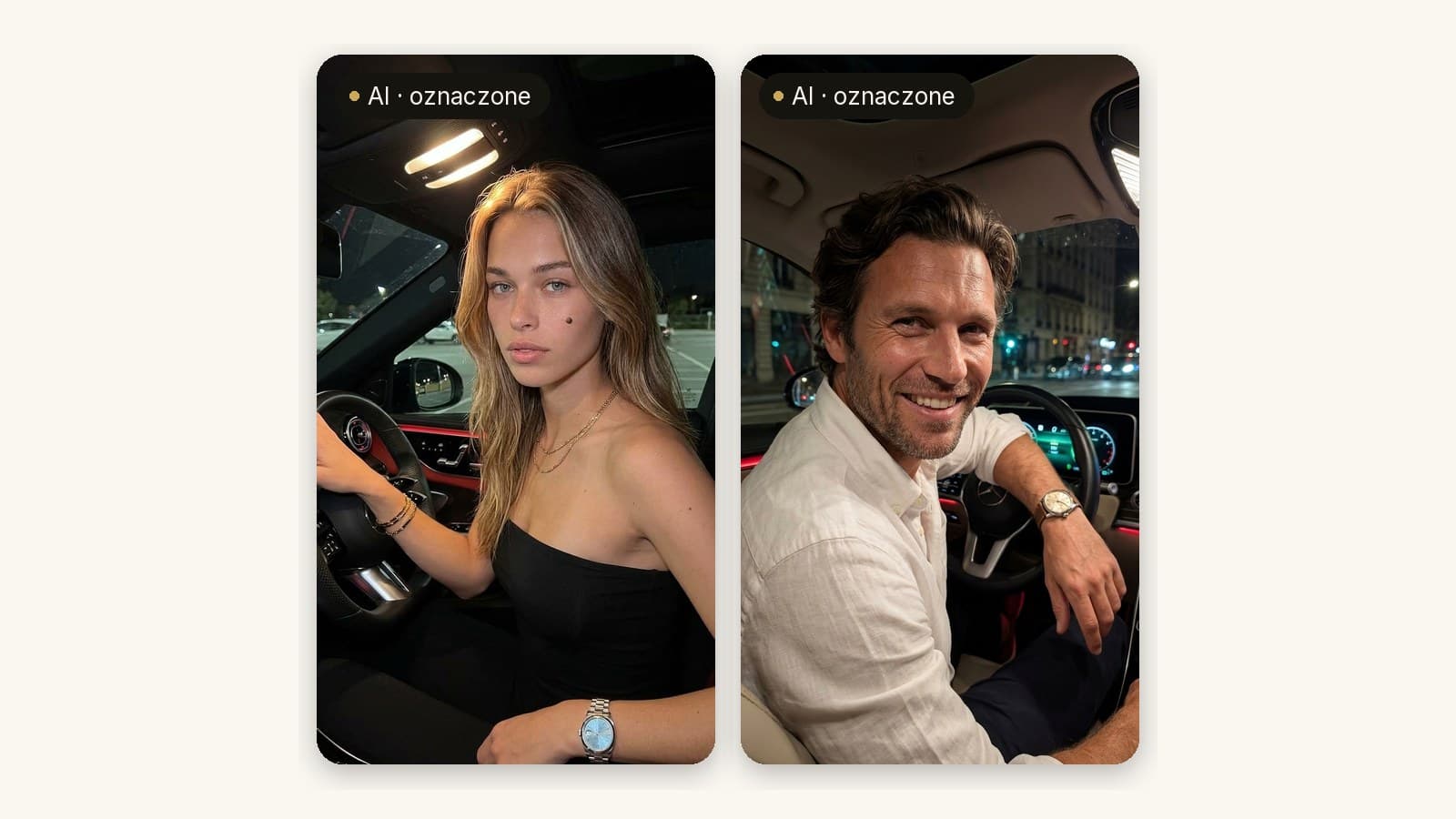
A generator is a tool. You type a prompt, you get an image. Fast, cheap, self-service. The catch is that a tool has no taste, doesn't know your brand, and takes no responsibility for the fact that the face in the photo changes in every frame. Everyone knows the look: that telltale smoothness, plastic skin, hands with the wrong number of fingers, light that doesn't exist in nature. The algorithm does exactly what you ask — and the trouble is you don't know what to ask, because this isn't your job.
An AI studio uses the same models but treats them like a camera, not a vending machine. Real face, fake trips. There's a person here who keeps a character consistent across shots, watches the light, the framing, the brand continuity, and cuts the frames that scream "AI." It's the difference between buying paint and commissioning a painting. Studio, not generator — that's not a slogan, it's a description of where responsibility for the result actually sits.
Generator, agency, studio — a comparison table
| Criterion | AI Generator | Creative Agency | AI Studio (SpotMade) |
| Cost | Lowest (roughly from 0 to ~25 EUR/month for a subscription) | Highest (roughly from several thousand per project) | Mid-range, predictable package |
| Turnaround | Minutes, but with piles of missed shots | Weeks (shoot, edit, revision rounds) | Days |
| Quality | A lottery, often plastic | High, but slow and expensive | High and repeatable |
| Brand consistency | None | High | High, maintained by hand |
| Scale (volume of content) | Theoretically unlimited | Low (every frame costs) | High |
| Content rights | Unclear, depends on the tool's terms | Depends on the contract, sometimes a time-limited licence | Transferred to the brand, clearly |
| Who owns the result | You | The agency | The studio |
The table isn't meant to decide for you. It's meant to show that every choice is a trade-off. A generator buys you speed at the cost of quality and control. An agency buys you quality at the cost of time and money. An AI studio sits in between: faster and cheaper than an agency, but with the quality and accountability a generator can't offer.
What it really costs — and what hides behind the price
The most common mistake is counting only the invoice. A generator looks free until you count the hours your team spends prompting, selecting, and discarding missed frames. A cheap subscription turns into expensive time from people who were supposed to be doing something else.
An agency is expensive up front — and often slow, because the process assumes a shoot, an edit, and rounds of revisions. You pay for quality, but also for overhead, scheduling, and the risk that the first version misses. For a single big campaign that can be justified. For a steady stream of content, rarely.
An AI studio prices a package for a set of finished pieces. You pay less than for an agency shoot, you get it faster, and you know in advance what you'll get. The key is predictability: budget, deadlines, and quality are agreed before the start, not discovered along the way.
Content rights — the topic everyone skips
This is the part that can come back to bite you months later. With a generator, the rights to what you create are often unclear — tool terms change, and the commercial status of an image depends on conditions nobody reads. With an agency, rights depend on the contract: sometimes you get a full transfer, sometimes a time-limited licence you have to renew. An AI studio should transfer rights to the brand clearly and in writing — because content you can't legally use in an ad is worth as much as no content at all. Before you sign anything, ask one question: whose will this be, and what am I allowed to do with it.
How to choose — a short decision map
- •You need one image for an internal presentation, once, with no brand requirements — a generator is enough.
- •You're running one big campaign with a real shoot plan and live people — an agency makes sense.
- •You need a steady, consistent stream of visual content with the brand's face, fast and without the plastic — that is exactly the job for an AI studio.
Most brands that ask "how do we do AI content" actually need the third option, but reach for the first by default — then wonder why the content looks cheap. Choosing an operator isn't choosing a technology. Everyone has the models. The difference is who takes responsibility for making the result look like your brand, not like a prompt.
What's next
If you're weighing how to organise AI content production for your brand, the simplest place to start is a conversation about a specific task, not about tools. Write to partners@spotmade.com or visit the /szkolenia page — we'll show you the mechanics, and you'll see the difference between a generator and a studio for yourself.